
an Artistic Score Engraving (around) June 2023 update
Dear all,
I hope this message finds you all well. These last three months have been incredibly packed for me, and I have not been able to raise my head until last week. I will once more do my best to keep this report concise, so let’s get straight to the point!
What have I been up to?
Opera engraving & surviving Sibelius bugs
I have completed the engraving of the first opera of my career as a score designer, and I am now proofreading it to build the final print-files. This is, by far, the biggest work I have ever engraved: 2 Acts, 12 total scenes, 2006 bars, a big orchestra (2.2.2.2, 3.2.3.1, timpani, percussion 3 players, on-stage percussions, harp, strings, plus SATB choir and 8 soloists), running 90 minutes in total. It will be premiered April 2024.
I have learned immensely in this process, even with Sibelius trying to make my life harder at every turn. It appears that the length of the score didn’t affect its performance, rather the number of staves did. This will require careful planning for the future. There was even a bug that misplaced all dynamics in a selection—and the team didn’t even acknowledge it.
Force them through socials
I have an idea, though: since many recent Sibelius updates have been driven by YouTubers, it is clear that if you want your voice to be heard, you need to go viral. That’s what I will (try to) do, in my upcoming series (both blog and video): Sibelius bugs and how to survive them! We will see if they will care more then!
On the same page, I have been deeply disappointed by a recent move from the Sibelius team: they included a new score by a colleague who runs a YouTube channel in the example scores. That would’ve not been so bad if they had not also included his website as a footer in the score. Given how many millions of users Sibelius has, this is free marketing of the worst kind. This is the first time Sibelius credits someone like this; no one of the contributors of Sibelius ever received a single mention, let alone a website link inside the program. This is a sad time for anything we do: either spend all your day on Instagram and TikTok, or accept to be nearly invisible.
Conference at TUFTS University
On April 3rd, I held a Zoom conference on music notation at the TUFTS University, Boston, invited by Prof. Kareem Roustom. While the preparation was a wonderful experience, I can’t say I enjoyed the event: students never stepped in to ask questions, and it felt like speaking to an empty room. I even sent them the presentation PDF, plus my contact if they had any question, but no one ever contacted me. I don’t know if it works the same everywhere in the USA, but we had 75 minutes and at 73.5 they started telling me “we need to go, bye”. It didn’t feel good.
What am I working on?
Thoughts on Scordatura
In one of the pieces I’ve been working on, one had scordatura of 3 out of the 4 cello strings, and was shocked to see how modern composers prefer to write in “concert pitch” instead of “transposed”. That means that if the strings are tuned—say—to G-sharp, D-sharp, G-sharp, C, you need to re-learn your playing to adapt to the new tuning. We did the other way around for three centuries, so I wondered where this change came from. I found the answer in the latest Bärenreiter Urtext edition of Bach Suites, which writes the V Suite in sounding pitches. This is a U-turn from all previous editions, and students will just get used to this because “it is Bärenreiter!”. The composer told me that: “plenty of cellists have played these pieces and never complained”, so I would like to quote the opening sentence of my notation talk:
Performers will play from whatever sheet you put on their stands!
Whether they will want to play your piece again in the future, that is another story…
Edition updates
With all what was happening around, I managed to update one edition: Dotzauer’s Twelve Original Pieces for two cellos, Op. 58, which is now available in several versions:
- Urtext digital and print
- Collectors’ Edition digital (including Urtext, Klingenberg, Janet & Cotelle, Hüllweck, and my personal suggestions)

New editions
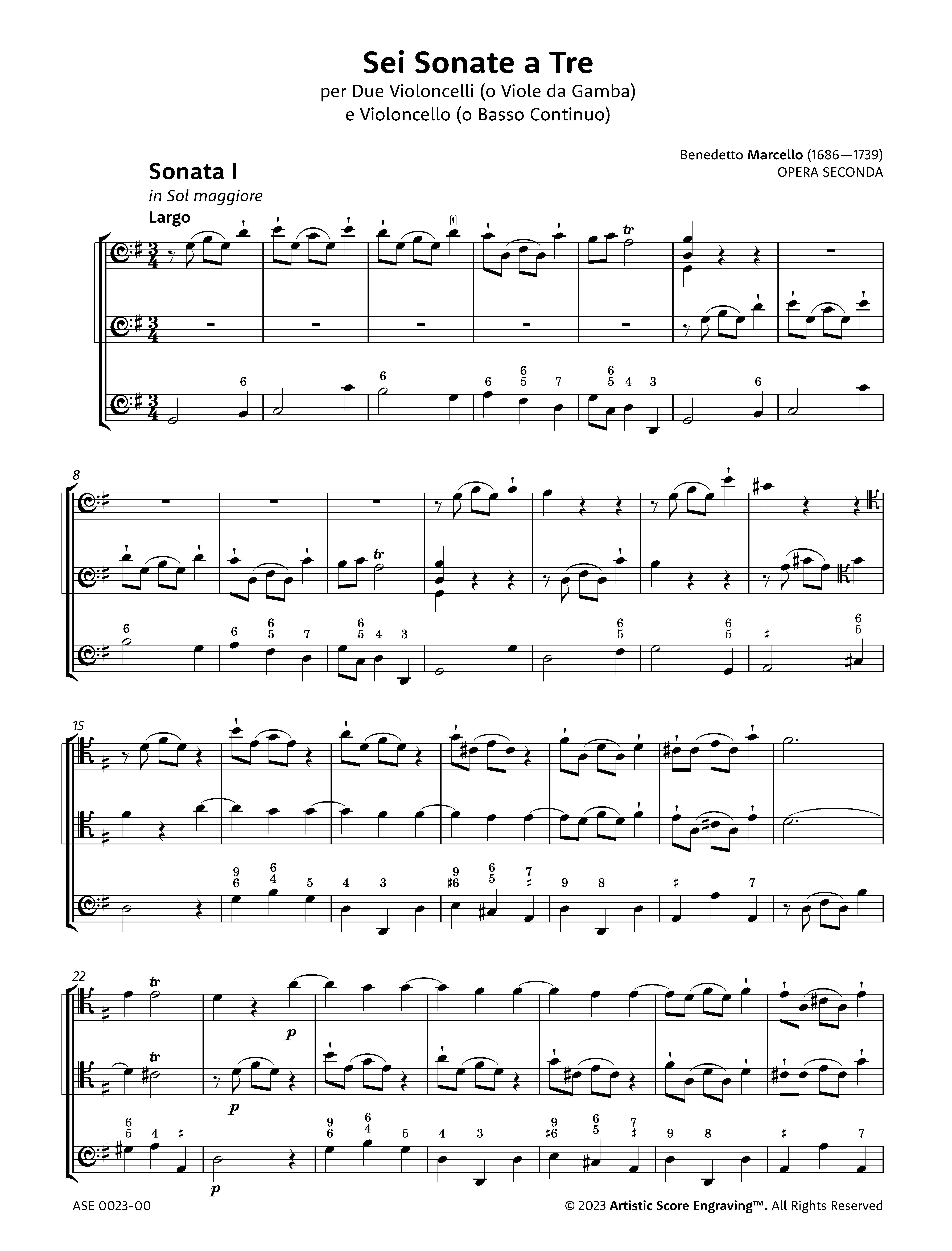
Finally, I have published the Six Sonatas a 3 for Two Cellos and Basso Continuo by Benedetto Marcello, and I am very proud of this because it was all engraved by my partner, Vanja. This was the project she used to fully learn the ins-and-outs of Sibelius! You can find it digitally here.
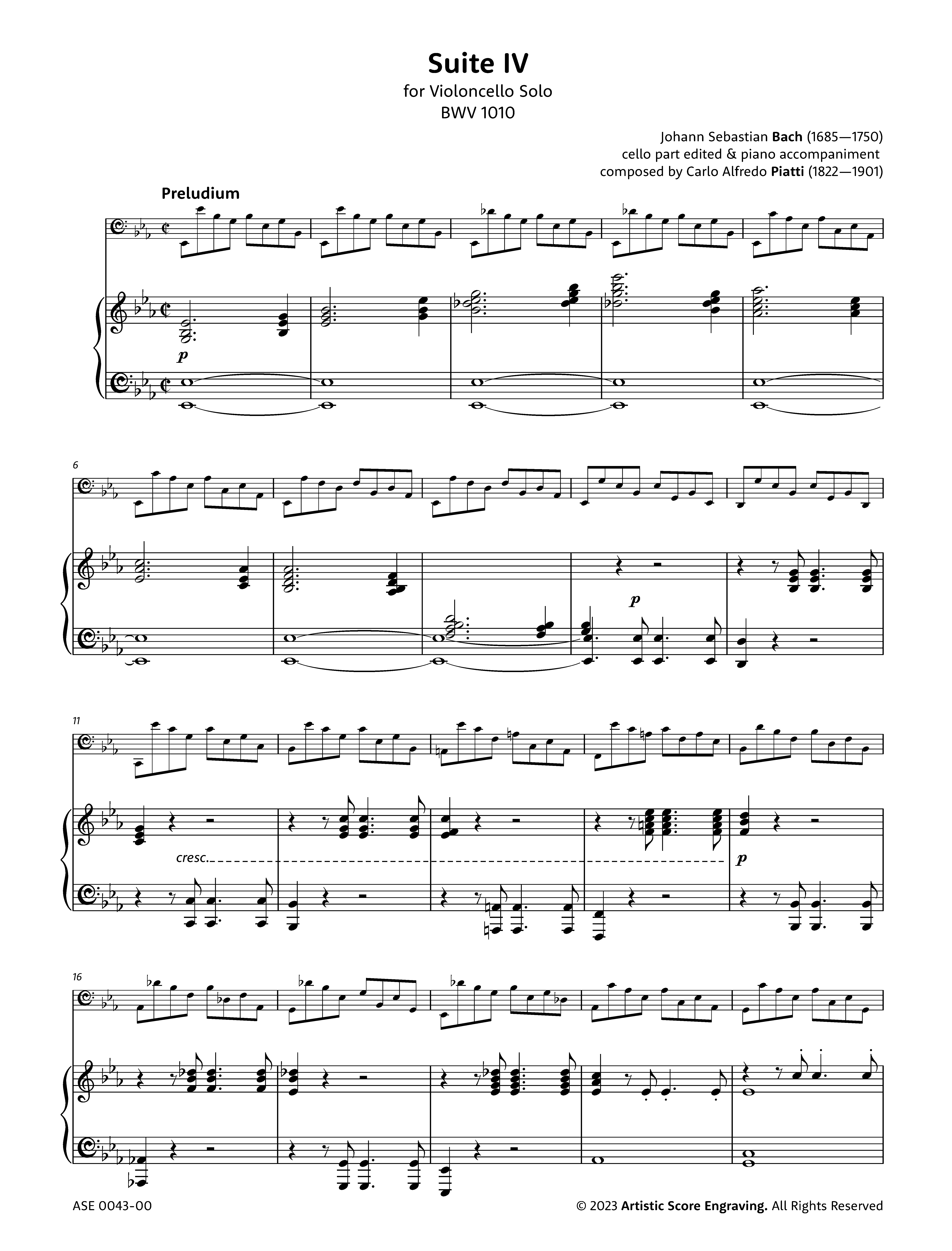
Piatti arranged two of the six Bach Suites, adding a piano accompaniment to them. Last year I published Suite I (purchase, video), and last week Suite IV (purchase, video) joined the party.
Upcoming
One edition has already been sent to the printer because there’s a massive surprise in it, which I will let you know as soon as it is available. More great collaborations are coming up, and I am eagerly awaiting a creative summer!
We have spent a couple of great days in Milano and Bergamo looking for rare editions of Dotzauer and Piatti. In Bergamo, we could access the wall-cupboard where Piatti stored his scores; they’ve been classified and kept in the same order as he had them. What’s great about this kind of trip is that we could find printed editions of his compositions—some of which are on IMSLP and so, potentially, not worthy of a modern edition—full of pencil markings from his hand! The Piatti Opera Omnia project is going to make good progress in the upcoming months, so stay tuned!
Last but not least!
Now that 5 (7 by the end of June) of our editions are available in print, two new possibilities are open:
- If you teach in a music school, public or private, or music university, you can ask their library to purchase our scores with an EDU discount.
- If you prefer to purchase our scores through your local sheet music store, please give them our contacts and ask them to get in touch.
I will spend every ounce of spare time I have this summer getting in touch with cello faculties around the globe and see if they are interested in what we do here. The sheet music market is so crowded that getting noticed is very hard.
Bottom Line
That said, please share this with as many of your friends and colleagues as possible if you have time.
All my editions can be browsed here in the catalogue, while on my YouTube channel you can watch the rendition of some of them.
If you would like to follow me more regularly, feel free to join my mailing list here. If you want to actively support what I do, be sure to check out my Gumroad Support Program, it would make a world of difference, and it would greatly reward you while doing it.
Thank you for reading through all this, I hope you found something useful in it.
Until next time.
Michele
 Music Preparation Services
One thought on “A Midsummer’s Day-Dreaming”