

An Artistic Score Engraving update for February-March 2025
Dear all,
Welcome to a much delayed issue of our newsletter. I’m sorry to have left so much time pass by since the last instalment, but too many things got in the way. Generally speaking, I am forced to switch from a monthly schedule to a “whenever I can” one. Sadly, I have my hands tied on this.
Without further ado, then, let’s begin!
Gratitude Corner
This time, I can only be grateful for my health, which is holding up reasonably well in this chaotic period. I’m integrating daily basic Tai-Chi exercises in the morning to keep my spine-shoulder-neck and legs from collapsing. It’s not much, but it makes the difference! If you’ve not tried it yet, then, try the Pomodoro technique and, for Heaven’s sake, close your eyes in the breaks!
Every evening I repeat these short sentences from a great mindfulness course I attended last year:
May I be safe, and free from suffering.
May I be as happy and healthy as it is possible for me to be.
May I have ease of being.
I certainly wish the same to all and every one of you. Our (mental and physical) health is the only thing we have that we cannot live without.
NEW EDITIONS
When I was a student, our teachers taught us that we needed to find our inner voice (after practicing octaves, obviously); they insisted that our goal was to be unique, to distinguish ourselves from the crowd. Another big name of the cello once shared with me how competition prizewinners approach him asking what to do to emerge. He told them that, if they wanted to be considered “real estate”, they first needed to offer something unique that others didn’t have. He was clearly referring to record and become champions of rarer, unheard of repertoire.
My entire publishing initiative revolves around forgotten composers whose music deserves to be at least recorded once, to get to a place where it can be remembered. So, this is the absolute best place for any cellist who wants to find good music, well engraved, finely printed, and unrecorded, sometimes even never played before.
Do you really want to record the Beethoven Sonatas again? Do you honestly think you can still say something unique about them? And even if so, do we need yet another recording of the same pieces? I only go to concerts if the program shows something I’ve never listened to, or that I don’t know that well.
If you think you are the right person for this, please get in touch. An important disclaimer: this will not be a sponsored initiative, rather an action through which we will support each other. So, don’t expect a “this edition is sponsored by SouthwestVPN” kind of thing, ok?!
One more thing… Do you teach at an academy (or at a school) where there is a library? Do you think your institution would benefit from having a copy of my scores? Please get in touch.
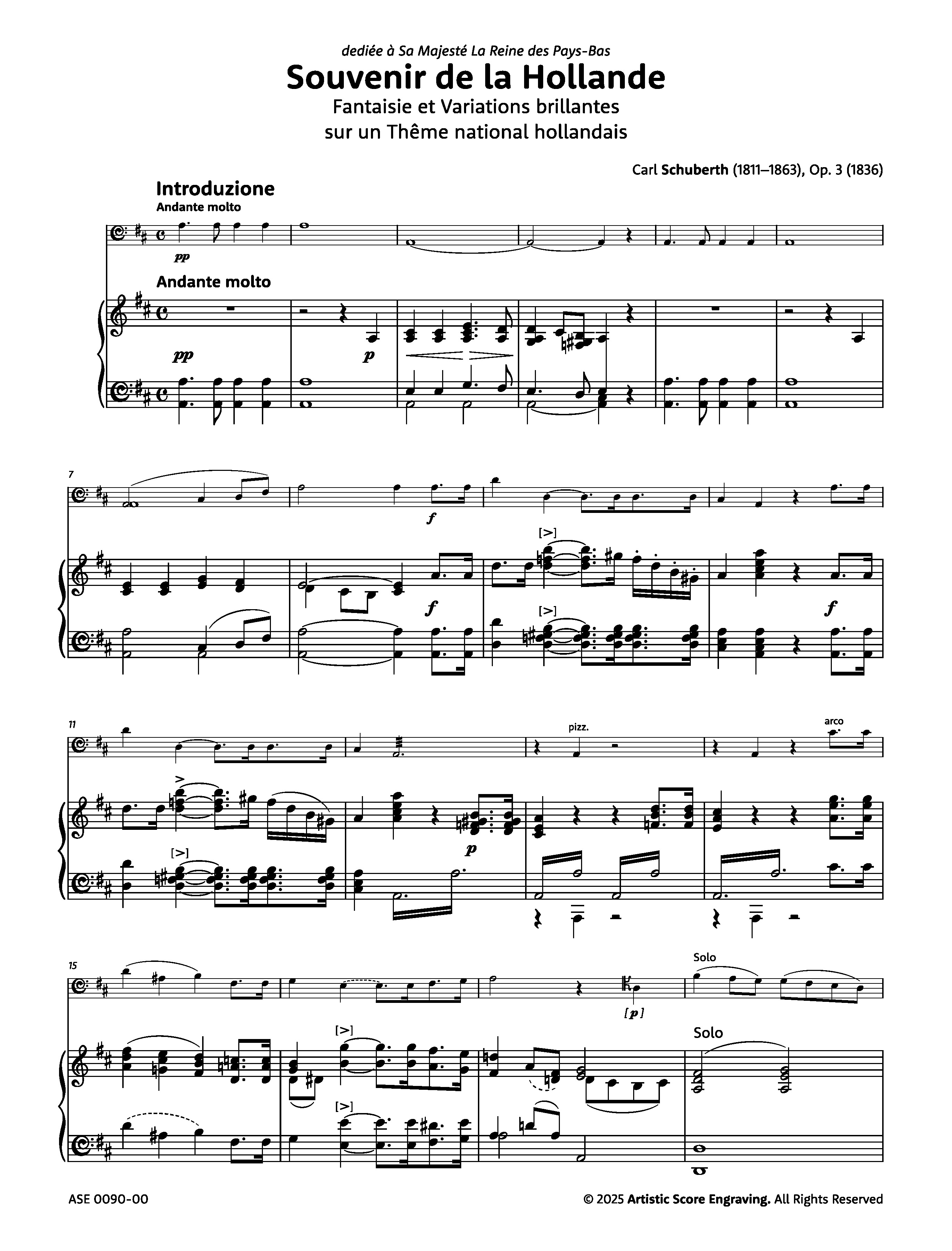
Schuberth – Souvenir de la Hollande
This new edition marks a fundamental milestone in our editorial line, for two reasons: first, it brings forward the Dresden Cello School line with yet another of Dotzauer’s students; second, it is the first edition encouraged by a direct descendant of the composer. That’s right, Michel Schuberth, who has been conducting a fascinating research on his ancestor Carl Eduard (1811–63), contacted me last year. From this, a wonderful collaboration blossomed and the first fruit of our joint venture is the Souvenir de la Hollande, Op. 3, in its version for cello and piano.
I suggest you read the interview Mr. Schuberth gave to the blog, then the deep dive on the edition, and then listen to how this piece sounds. Subsequently, you can secure your digital copy (alternative link), with the printed one coming soon.
Dotzauer – 6 Exercise Op. 116
What would I do if I didn’t have friends pushing me forward? Here’s a new edition proposed by M° Yuriy Leonovich, the Six Exercises for cello solo, Op. 116, by Justus Johann Friedrich Dotzauer. This is the 4th book of his cello studies and, if you only ever knew “the 113”, you should find at least five surprises in there. Yuriy masterfully recorded the fugue, No. 6, and also contributed to the Editorial Notes, showing how close these pieces are to Bach and Chopin. Every so often, a good blind listen would help demystify these second-grade composers.
You can find the digital edition here (or here), with the printed one coming soon.

New Printed Titles
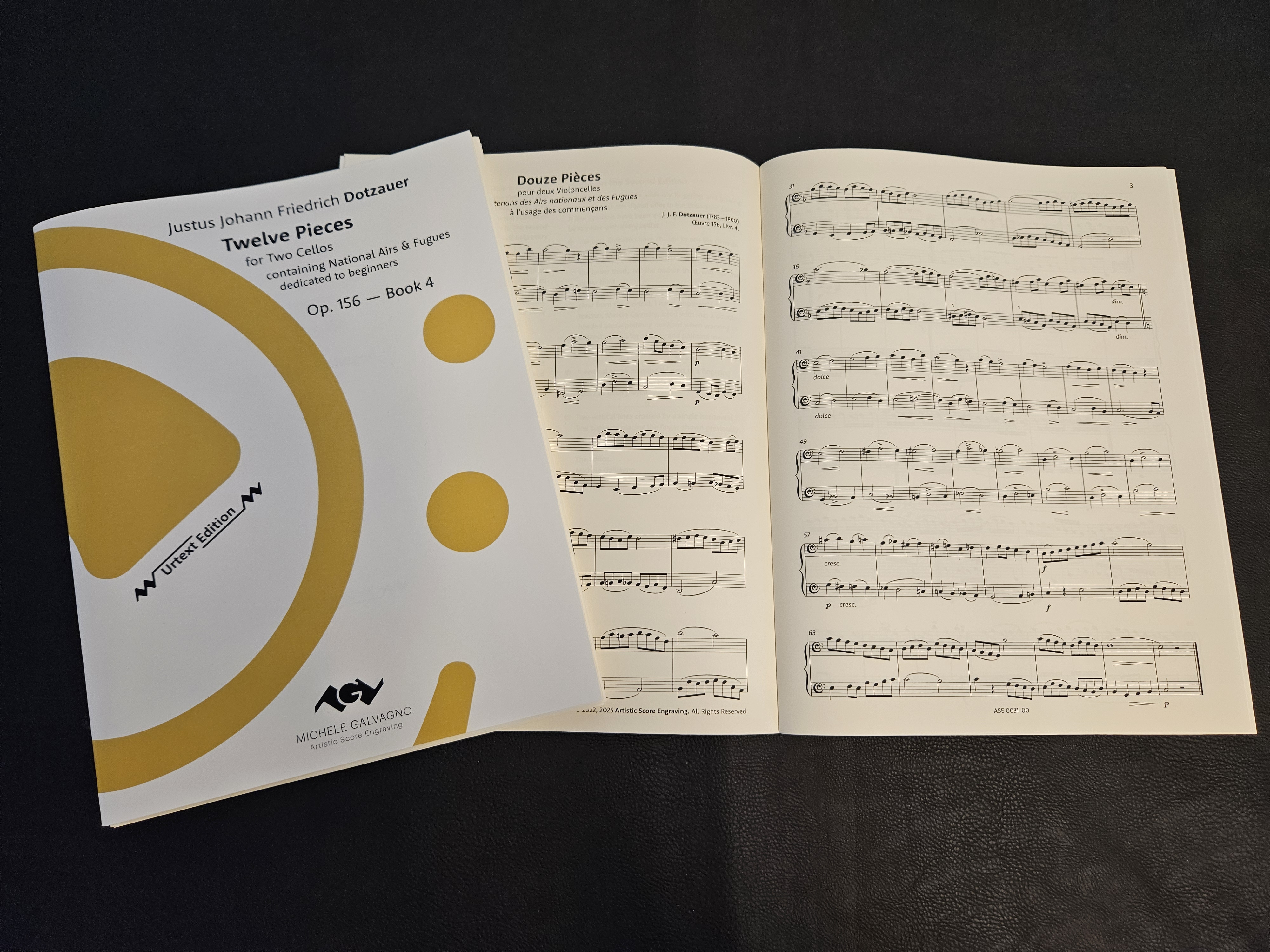
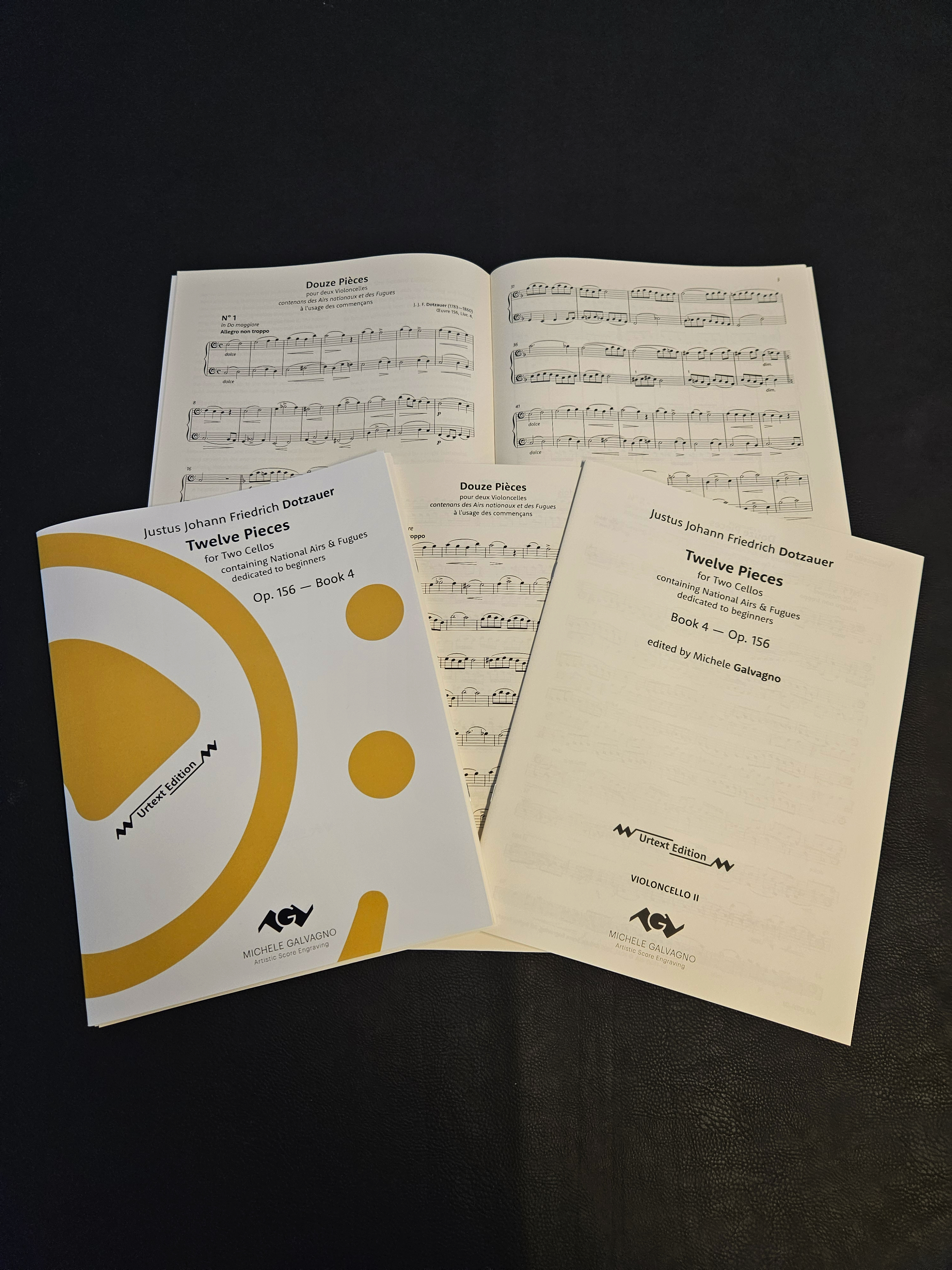
Dotzauer – Twelve Pieces for Two Cellos, Op. 156
This edition contains fugues and national tunes arranged for two cellos, among which “La Marseillaise”. Listen to it, read the deep dive, then grab the physical book (or the digital copy if you really prefer).
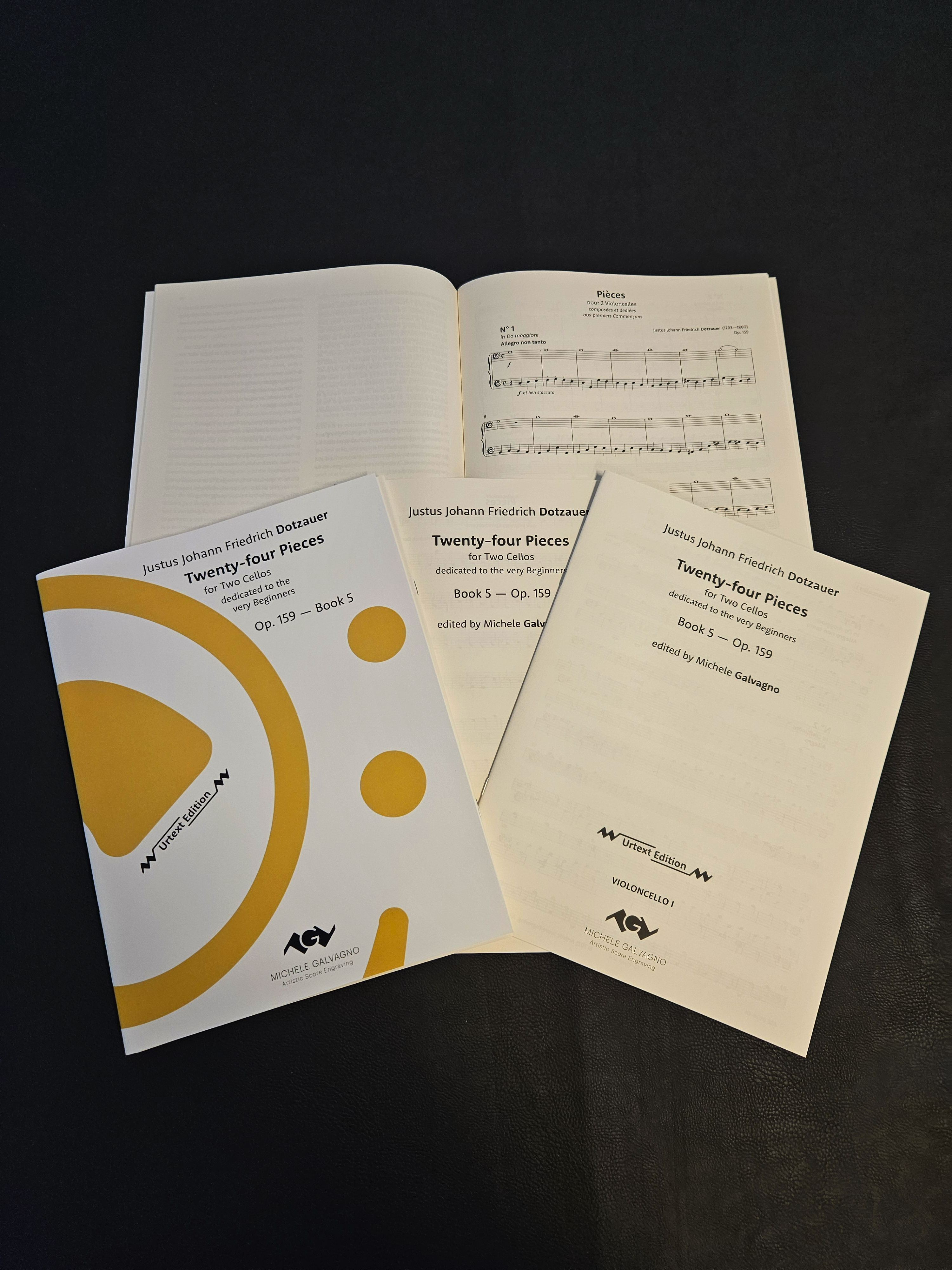
Dotzauer – Twenty-four Exercises for Two Cellos, Op. 159
This is the last of the five books for two cellos, possibly the most graduated one in terms of difficulty. All of them are now available as printed books. Listen to this wonderful duet in E-flat minor, read the analysis, then secure your hard copy (or the digital one).

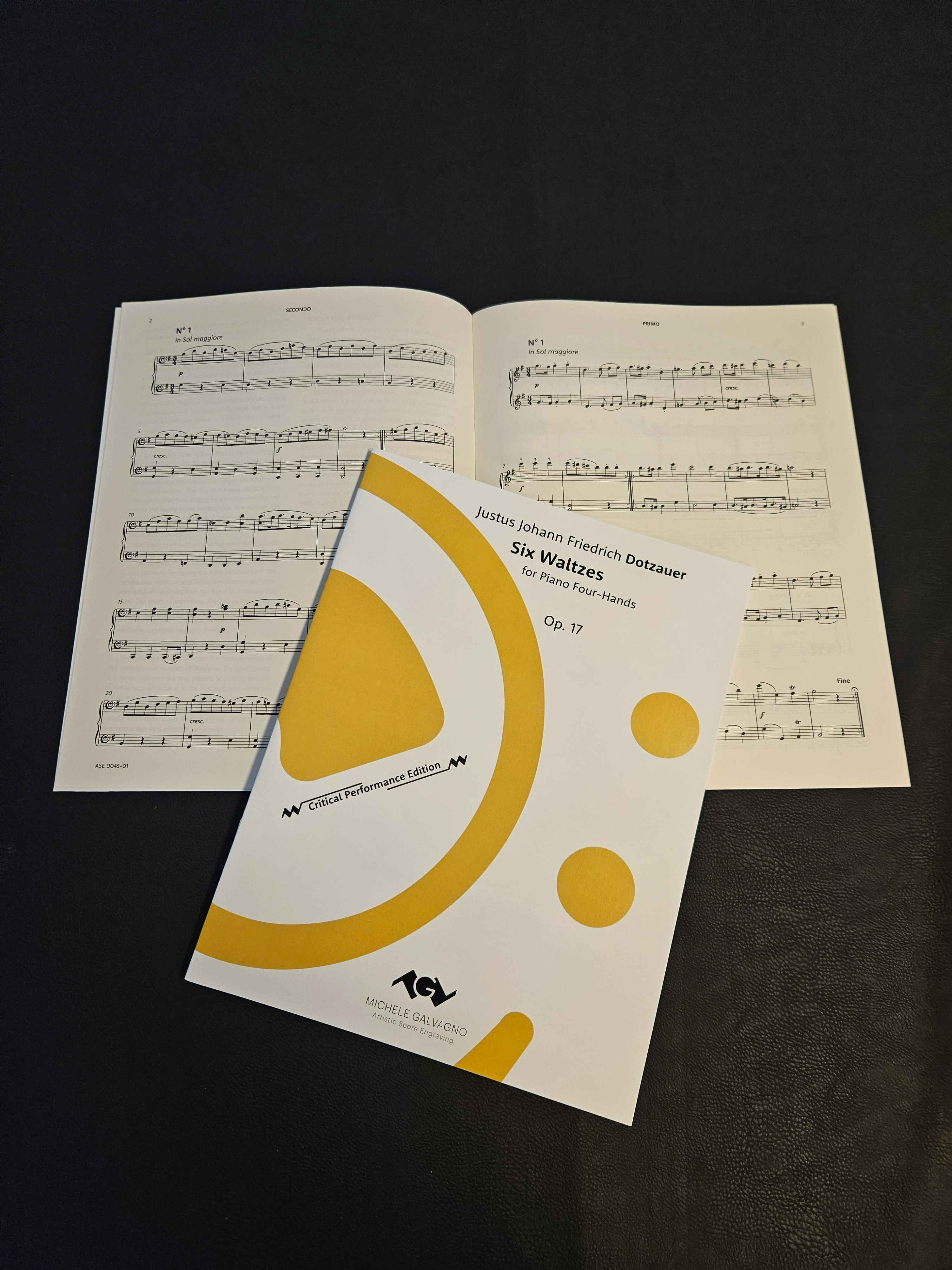
Dotzauer – Six Waltzes for Piano Four-hands, Op. 17
Would you expect Dotzauer to write for piano? You would be surprised at how much he actually did! This is the second of his three sets of waltzes for piano four-hands. Listen to an example, read the story behind these pieces, and find the book (or the PDF).

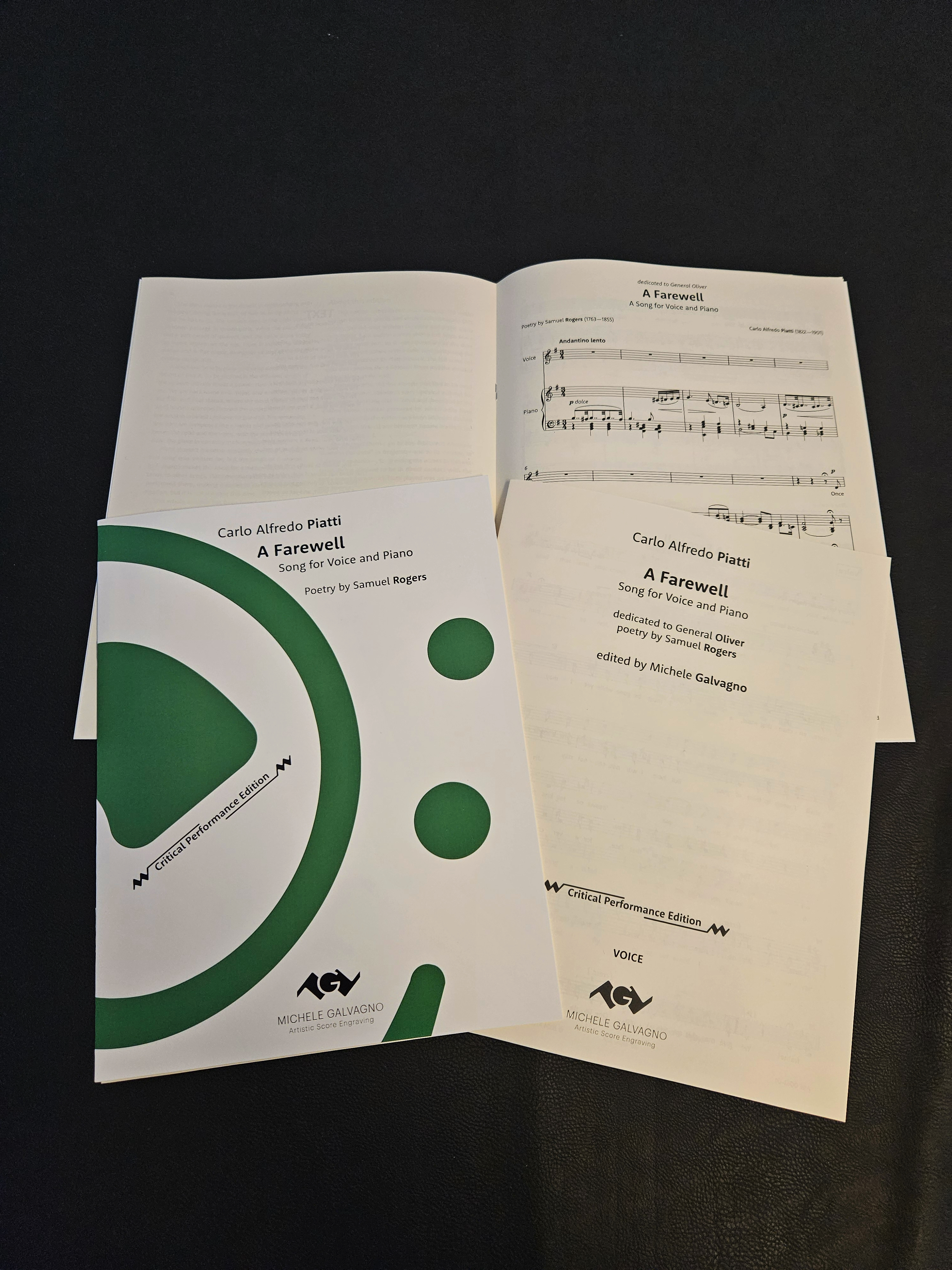
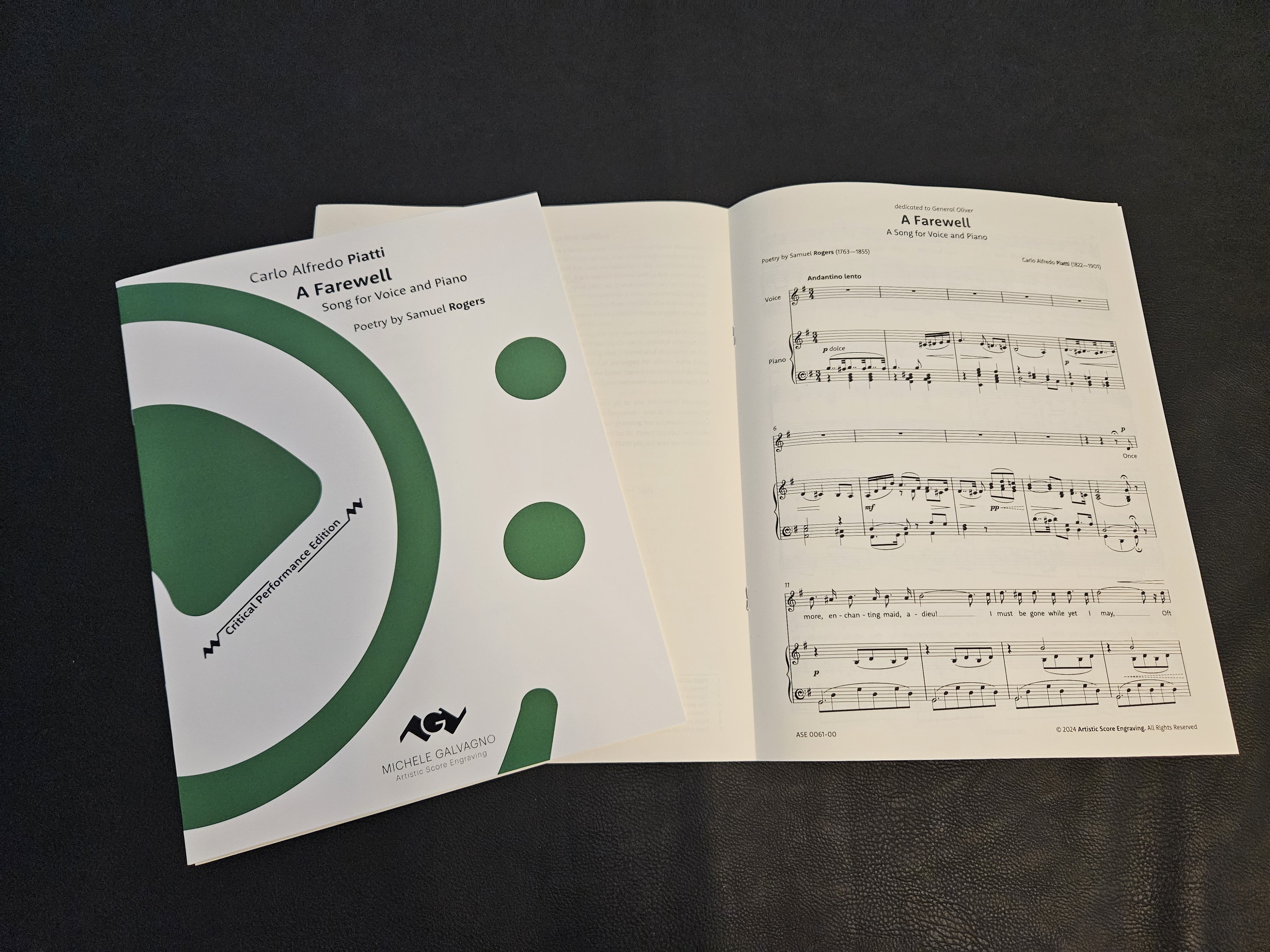
Piatti – A Farewell for Voice and Piano
A few months ago I released both versions of this song, one with and one without cello, but had only printed the one with cello. The other is now finally available. Listen to how it sounds (here’s the one with cello for comparison), read the story common to both versions, and find the newly released book (or the PDF).
NEWS
… from the Engraving side
These first few months have been absolutely packed with assignments coming from multiple fronts at the same time. The most exciting piece is a Requiem for three soloists, choir, solo viola, and orchestra which will be premiered in June in Egypt. Stay tuned for that! That and another piece made me sharpen my piano reduction skills, something that can come very useful in many scenarios.
At the end of January I got involved in a tiny project with an Italian guitarist, which ended up in disaster: I worked 3x more than agreed, the gentleman protesting about… my invoice’s design (?!). In 14 years of professional life in this field, I have never completed a single project with an Italian customer without some kind of very uncomfortable issue.
… from the Publishing World
Trying to plug into the wholesale market for printed scores reveals a sad requirement: doors open only with a specific key, shaped as a few ten thousand dollar bills rolled together. If you are a small publisher, instead, it is your duty to remain small and shut up. Too negative? Well, read on.
Here’s how it works, in case you didn’t know: retailers get a ~40% cut from the cover price. Then there’s the distributor’s cut (~30% of the remainder). From there, subtract printing costs, and here’s the big catch: if you print 250+ copies, that cost is ≤5% of the cover price. That, though, is possible only if you are printing Beethoven, Debussy, or other “famous” composers. In my case, every copy costs ~15% of the cover price. From what remains, an independent publisher has to pay taxes which, in our flat-tax system, doesn’t let you deduce costs. Thus, the system itself is devised to crush small ones and let big ones prosper. Here’s a practical example:
- $20 cover price (+VAT, so the customer will pay more than this)
- Retailer pays $12 to the distributor
- Distributor pays $8.40 to the publisher
- The publisher has already paid at least $3 for the printing
- The publisher pays at least 35% in taxes and contributions on (3.), that is $2.94
- Total remaining: $2.46
For reference, if the cover price goes down, the printing cost doesn’t go down proportionally because every single cardboard cover has a fixed price regardless of quantity!!
Perhaps there will be economy experts among you who will tell me that this is nice and normal, but to my eyes, it is just ridiculous. I have nothing against sharing the cake with involved parties, as long as my cut is still the biggest share in the end. With this kind of numbers, I would need to sell 500+ copies of any score to make up just the time spent engraving, researching, and building the book.
On another page, someone was recently looking for cello duets; I offered everything I had and all I got in return was:
That’s too expensive for what they are (Referring to Dotzauer’s duets).
So that’s the truth: in the business world, though, you need to offer something people already know, something familiar, something that doesn’t require any effort or engagement. Do you want to sell something different? Make it cheap!
I’m not totally sure I am glad to have realised all these things the hard way instead of studying them in that economics course I was never offered. A part of me would have surely preferred total ignorance. But don’t worry, I am not changing my course at all. At worst, I will slow down, but I will still crush every and any wall built in front of me.
… from the Education side
About one year ago, I applied to become a Certified Trainer of a notational software. They were initially enthusiastic: “let’s get you certified as quickly as possible” but, twelve months of silence later, they turned me down. My general understanding—fuelled by what I see online on the public forums—is that, ultimately, the people currently eating the cake must be protected, and all those who are genuinely trying to help get the doorknob slammed in their face.
Remember what I told you before? Big ones get bigger, small ones need to stay small, and especially shut up!
But I have an idea… Stay tuned!
Bottom Line
Thank you for reading up to the end. As always, I value your input, comments, and feedback.
You can join my mailing list to get weekly gifts and promotions; browse my editions, and check what’s available for print in the HNE Store.
My YouTube channel, finally, contains video renditions of most editions.
See you… next time for the ASE update. I hope it will be soon. Please let me know what you are doing and where your musical adventures are bringing you.
Musically yours,
Michele
 Music Preparation Services
One thought on “Into the Maelstrom”