
Originally posted on The Eclectic Light Company:
Finding out how much free space there is on an APFS disk is notoriously difficult. Depending on where you look, its size comes and goes, and it’s not uncommon to see it apparently change by tens or even the odd hundred GB in the space of a few…
Author Archives: Michele Galvagno
Last Week on My Mac: Still struggling with snapshots
Originally posted on The Eclectic Light Company:
It’s strange to think that most of us have now been using APFS for well over four years, but it still surprises and baffles us. Much of this week I’ve been looking at snapshots, one way or another, whether they’re the vanilla variety which live alongside the volume…
NEW EDITION: Arrangement of David Popper’s “Wie einst in schöner’n Tagen”, for two cellos

As a cello teacher, it is paramount that I always have an accompaniment ready to play with my students at any moment. This may prove easy if the repertoire is made of cello duets or baroque/classical sonatas for cello and basso, but it may become a problem when the piece is original for cello andContinue reading “NEW EDITION: Arrangement of David Popper’s “Wie einst in schöner’n Tagen”, for two cellos”
NEW EDITION: “Pioggia d’Aprile” for Cello and Piano by Carlo Alfredo Piatti
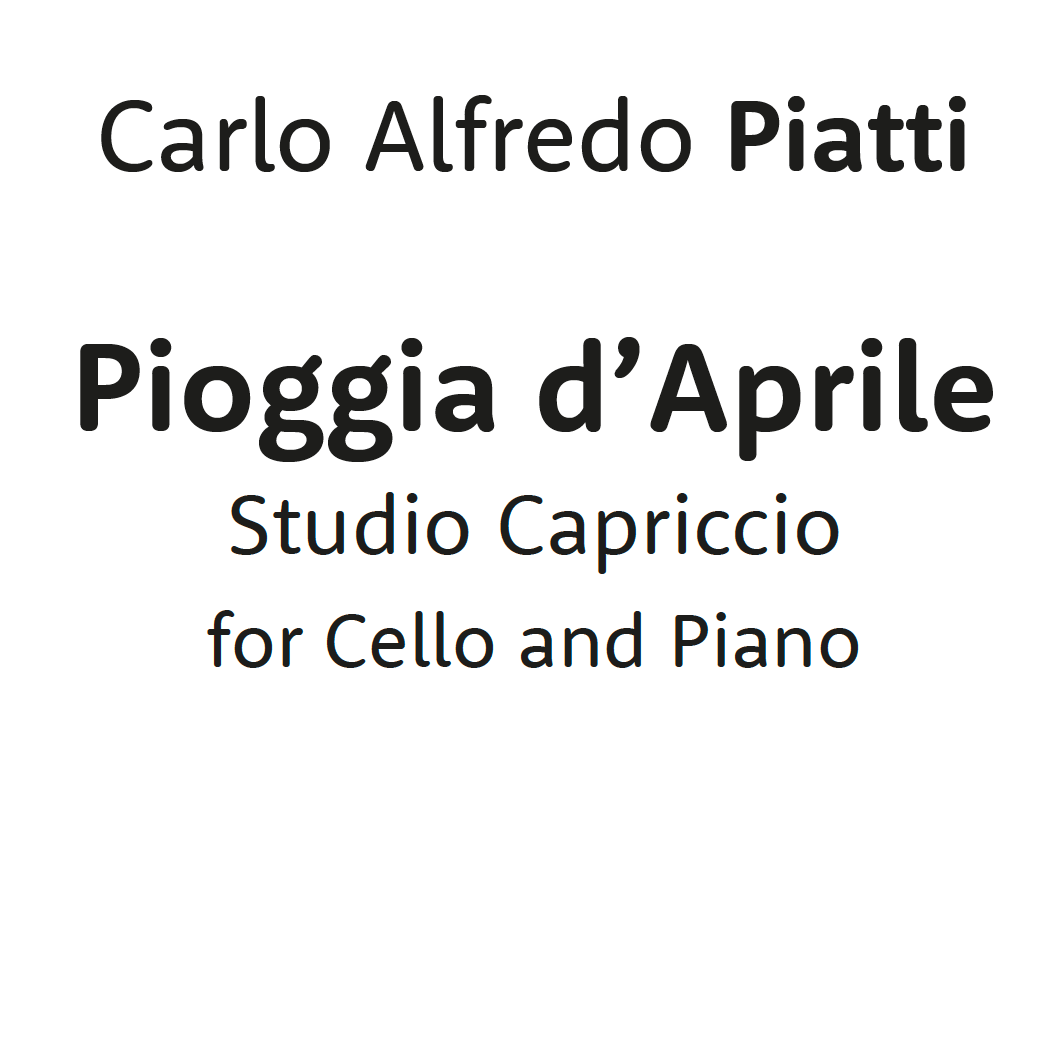
As soon as I realised that 2022 would have been the 200th anniversary of the birth of Italian cellist and composer Carlo Alfredo Piatti (1822–1901), I knew that something needed to be done. I quickly browsed my publishing plans for the nearest future and delayed everything else to make room for this composition. While PiattiContinue reading “NEW EDITION: “Pioggia d’Aprile” for Cello and Piano by Carlo Alfredo Piatti”
Learning the C Programming Language as a Classical Musician [15]
Episode 15 — Types (Part 7: Practical Examples) Welcome back! Our journey into C types enters its final stage: after basic types and enumerated types, it is now the turn of derived types. This category contains arrays, structures, unions, functions, pointers, and atomic types. We have just scratched the surface of most of them inContinue reading “Learning the C Programming Language as a Classical Musician [15]”
 Music Preparation Services